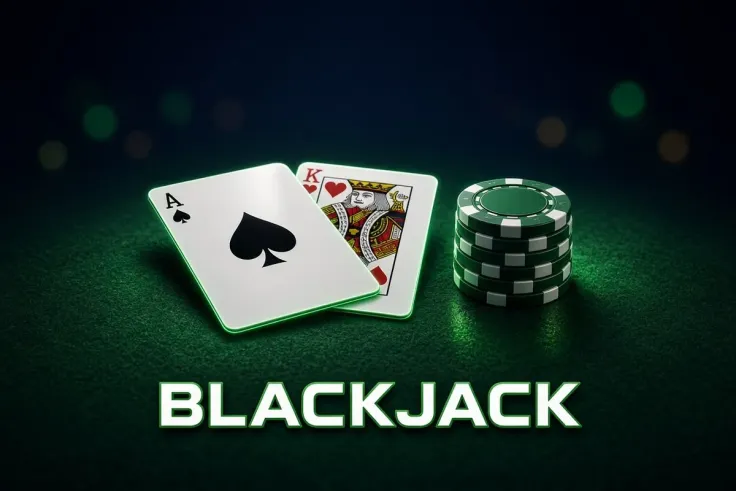
Blackjack is a card game in which you try to get closer to 21 than the dealer without going over. If you searched for national casino blackjack, this page explains how the game works, which variants are common and how software tables differ from live dealers. Check the lobby for what National Casino currently offers, since table rules differ from one version to the next.
Common blackjack variants
Most online blackjack follows one base game with small rule changes. These are the variants players most often see:
- Classic or European blackjack: the standard game with a small number of decks. In the European version the dealer usually takes the second card after players have acted.
- Atlantic City and Vegas Strip styles: named after the rule sets they copy. They differ on doubling, splitting and whether the dealer hits on soft 17.
- Multi-hand blackjack: you play several hands against the same dealer card in one round.
- Blackjack with side bets: extra wagers such as pairs or poker-style hands, played alongside the main bet. These are separate bets with their own payouts.
Do not assume that every variant above is available at National Casino. Open the lobby, read the rules panel of the table you want, and compare the payout for a natural blackjack, the dealer's rule on soft 17 and the doubling and splitting options. Small differences in these rules change the house edge.
Blackjack rules in short

A standard game uses one or more decks of 52 cards. Number cards count at face value, jacks, queens and kings count as 10, and an ace counts as 1 or 11, whichever suits the hand better.
Each round starts with your bet. You and the dealer receive two cards, and one of the dealer's cards is face up. A first two-card hand of an ace and a ten-value card is a blackjack, which usually pays more than an ordinary win. Many tables pay 3 to 2, but some pay less, so check the table rules.
Then you choose how to play your hand:
- Hit: take another card.
- Stand: keep your total and end your turn.
- Double down: double your bet, take exactly one more card and stand.
- Split: if your first two cards have the same value, divide them into two hands, each with its own bet.
If your total goes over 21 you lose at once. Once every player has finished, the dealer reveals the hidden card and draws until reaching the table's stopping total, commonly 17. The higher hand not over 21 wins, and equal totals are a push, where your bet is returned.
Basic strategy charts show the mathematically best decision for each hand under a given rule set. They reduce the house edge but cannot remove it or predict the next card.
19+ · T&Cs apply
RNG blackjack versus live dealer

In an RNG game, software shuffles virtual cards and deals them. Each round is independent of the last, and you set the pace by starting every hand yourself.
In live blackjack, a real dealer deals physical cards from a studio table and the video is streamed to you. Rounds run on the table's timing, with other players seated at the same game, and you decide within a set time. Betting limits and the side bets on offer are decided by each table.
The rules and the house edge depend on the table, not on whether it is RNG or live. Read the rules of any table you join. For dealer-hosted options, see the live casino page.
Practical points before you play

Learn the rules and payouts of the exact table before you bet. Decide on a spending limit you are comfortable losing, and choose a stake that fits inside it. Treat the money as the cost of entertainment, not as income.
Betting systems, such as raising your stake after a loss, do not change the odds, because each hand is independent. Insurance and most side bets generally carry a higher house edge than the main game, so understand what you are paying for.